

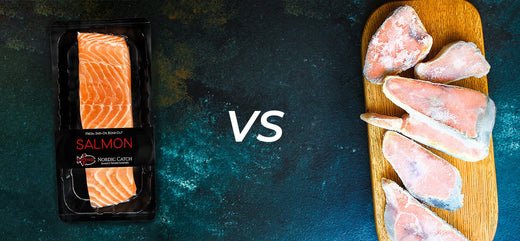
Fresh vs. Frozen Seafood: Why Fresh Still Matters
Frozen seafood offers convenience, longer storage, and access to a wider range of products. At Nordic Catch, fresh, never-frozen seafood remains at the heart of what we do.
We began with seafood sourced from Iceland, building our business around careful handling and regular fresh arrivals. Today, our selection includes both fresh, never-frozen seafood and carefully selected frozen products. Our appreciation for exceptional fresh seafood hasn't changed.
So what makes fresh seafood worth choosing, and where does frozen seafood fit in?
Why We Value Fresh, Never-Frozen Seafood
Taste and Texture
The appeal of well-handled fresh seafood is its natural flavor, moisture, and texture. These qualities are especially noticeable in simple preparations that let the fish speak for itself.
Freezing and frozen storage can affect texture and moisture retention. The extent depends on the species, freezing method, storage conditions, and thawing process. Choosing never-frozen seafood avoids those changes, provided the fish has been properly handled and enjoyed promptly.
That's why fresh seafood remains a priority for us, even as we've expanded our frozen selection.
Versatility in the Kitchen
Fresh seafood works beautifully grilled, baked, sautéed, or gently poached. When it arrives chilled, it also saves you the step of thawing before preparation.
For sushi, sashimi, or crudo, choose products specifically identified for those uses and follow their handling instructions. Being fresh or never frozen does not, by itself, make fish suitable for eating raw.
Quality Starts at the Source
A never-frozen label tells you part of the story. The species, handling, temperature control, and time since harvest also matter.
Our own team manages sourcing, packing, and order fulfillment. That hands-on approach supports the quality we're looking for in every product we select.
Responsible Sourcing
Fresh and frozen seafood can both come from responsibly managed sources. The label alone doesn't tell you how a fish was caught or raised.
At Nordic Catch, we consider each product's origin, quality, and production practices. Our commitment to responsible sourcing applies across our fresh and frozen selections.
Fresh Seafood 101
Proper Handling and Storage
Temperature control matters for both fresh and frozen seafood. Refrigerate chilled seafood promptly at 40°F or below. FDA guidance recommends using refrigerated seafood within two days of purchase or freezing it for later use. Follow any shorter product-specific instructions.
When thawing frozen fish, use the refrigerator and follow the package directions. Remove vacuum-packed fish from its vacuum packaging before refrigerator thawing, placing it in a clean, covered container.
Understanding “Fresh” and “Never Frozen”
Seafood displayed chilled may have been previously frozen and thawed. Ask about its history or check the label instead of relying on appearance alone.
Nordic Catch carries both fresh and frozen seafood, with details on individual product pages. Fresh items packed with dry ice may freeze during transit, so review the available shipping options if receiving your seafood chilled is important to you.
Preparation
Fresh seafood is a convenient choice when you're planning to prepare it soon. Frozen seafood gives you more flexibility to keep portions on hand and thaw what you need.
Both can work well in your kitchen. Choose according to the product, the dish, and when you plan to enjoy it.
Flash Freezing vs. Never Frozen
Rapid freezing helps preserve seafood quality by reducing the time it spends passing through the freezing process. Proper packaging and consistently cold storage help protect it afterward.
High-quality frozen seafood can deliver excellent results. It also makes seasonal and specialty products available beyond their immediate harvest window. However, freezing cannot restore quality already lost through age or poor handling.
Never-frozen seafood offers the opportunity to enjoy fish without a freezing and thawing cycle. For customers who value that experience, our fresh seafood selection remains a central part of Nordic Catch.
We choose fresh products for the qualities we appreciate in them, and frozen products that meet our standards for their intended use.
The Nutritional Benefits of Seafood
Both fresh and frozen seafood can contribute to a nutritious diet. Fresh fish is not automatically more nutritious, and freezing does not inherently strip seafood of its nutrients.
High-Quality Protein
Fish and shellfish provide protein that supports muscle maintenance and tissue repair.
Omega-3 Fatty Acids
Fatty fish such as salmon and mackerel provide EPA and DHA omega-3 fats. These nutrients are present in both fresh and frozen fish, with amounts varying by species and product.
Vitamins and Minerals
Depending on the species, seafood can provide vitamin B12, vitamin D, selenium, and iodine. Its nutritional value also depends on preparation and any added ingredients.
Fresh Seafood Remains Part of Our Foundation
Our selection has grown, but our appreciation for fresh seafood remains. We continue to offer fresh, never-frozen options for customers who value that experience, alongside frozen products that bring more variety and flexibility to the table.
Whether you're planning sushi night or a simple seafood dinner, explore the product details and choose the right fit for your meal. We'll handle the sourcing and packing with the same care.