

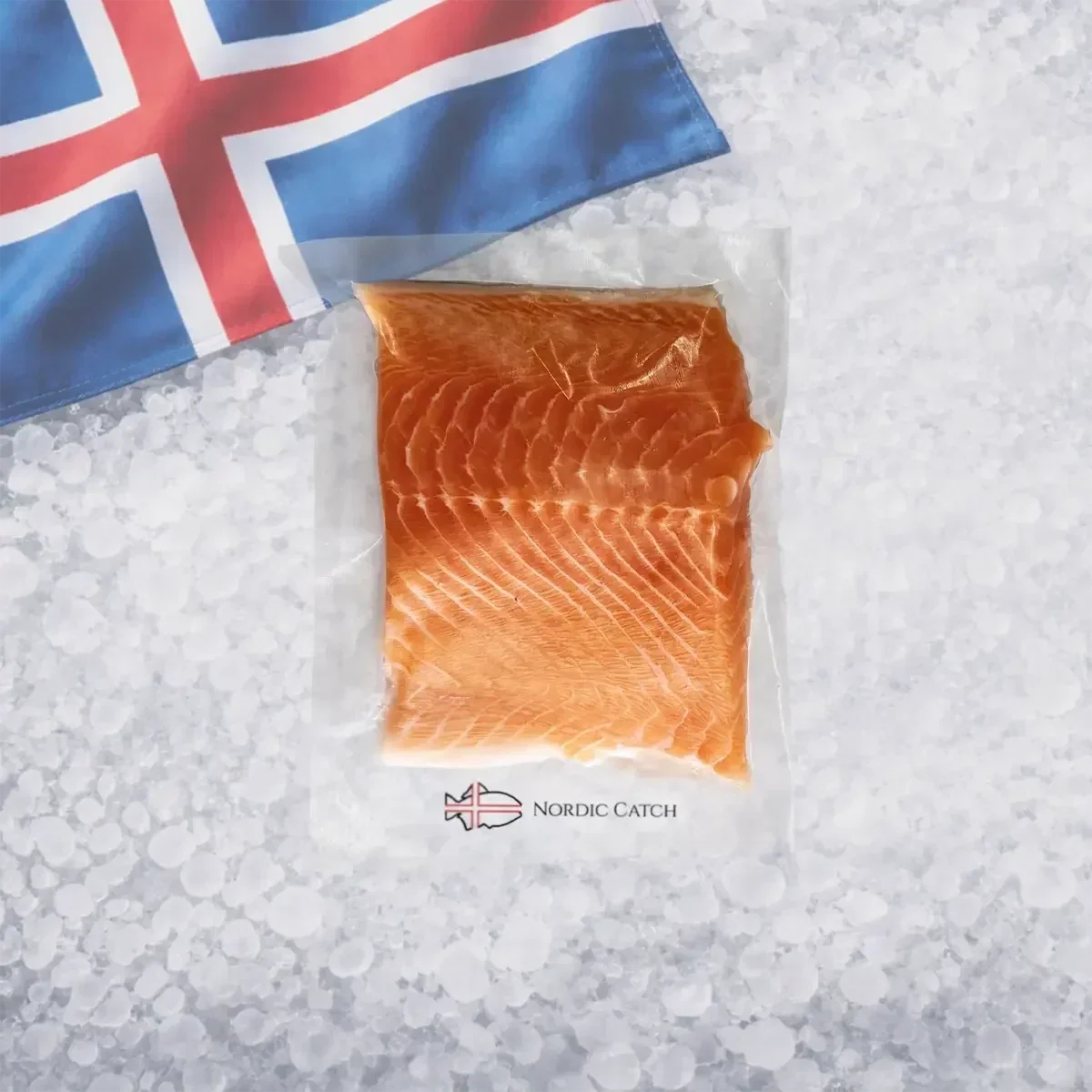
If you have never cooked arctic char, you are not alone. It rarely shows up at the average grocery counter, so most home cooks meet it for the first time on a restaurant menu and assume it must be difficult. It is the opposite. Char is the fish we point people to when they tell us they always overcook salmon. The fillets are thinner, the fat runs through the flesh instead of sitting in thick bands, and the flavor is mild enough that lemon and a few soft herbs are all it needs. A low oven does the rest.
Arctic char (Salvelinus alpinus) is a char, not a true salmon, though it belongs to the same salmonid family. It shares its genus with brook trout and Dolly Varden, which tells you most of what you need to know about how it eats: closer to trout in texture, closer to salmon in color and richness. The flesh runs from deep pink to pale orange depending on what the fish was fed. It tastes clean and faintly sweet, without the strong finish that puts some people off salmon.
The reason char is so forgiving comes down to two things. First, the fillets are thin, usually three quarters of an inch to an inch at the thickest point, so heat reaches the center before the outside dries out. Second, the fat is well distributed, so a fillet that goes a few degrees past where you wanted it still eats moist. Salmon can punish you because a thick center takes so long to come up to temperature that the outer layer overcooks while you wait. With char you almost never face that trade. For the fuller picture on how the salmon varieties differ from one another, read our Atlantic salmon vs Alaskan salmon comparison.
Nearly all the arctic char sold in the United States is farmed, and most of it comes from Iceland, which produces roughly three quarters of the world's supply in land-based tanks fed by cold spring water. Monterey Bay Aquarium's Seafood Watch program rates Icelandic char a Best Choice for exactly that reason: land-based systems keep farmed fish out of the ocean. Our Arctic Char, Sushi Grade from Iceland arrives as a skin-on 5.5 ounce portion, fresh and never frozen, shipped overnight. At $15 a portion it is the least expensive premium fillet in our catalog, which makes it a weeknight fish rather than a special-occasion one.
This recipe is built for a Tuesday night. Prep takes ten minutes, the oven does fifteen, and there is one pan to wash. The method is deliberately gentle: 325F rather than a roaring 425F, because a moderate oven gives you a wide window between underdone and dry, and lemon slices go under the fish so the skin steams rather than sticks. Once you have made it you will not need the recipe again, and that is the point. A fish this easy to get right is a fish you cook more often.
Nutrition
Arctic char is a moderately fatty fish, richer than cod and lighter than farmed salmon. USDA FoodData Central does not carry a dedicated arctic char entry, so the figures below are built on its closest farmed salmonid, rainbow trout (farmed, raw), scaled to a 5.5 ounce portion, plus the olive oil, lemon, garlic, and salt in this recipe. Treat them as a reasonable estimate rather than a lab result. What the estimate does show clearly is that char is a strong source of complete protein, vitamin D, and vitamin B12, with omega-3 fats spread through the flesh. Estimated values per serving:
| Fats | % DV* |
| Total Fat 16g | 21% |
| Saturated 3g | 16% |
| Trans 0g | |
| Polyunsaturated 3g | |
| Monounsaturated 8g | |
| Cholesterol 90mg | 30% |
| Sodium 560mg | 24% |
| Carbs, Protein & Micronutrients | % DV* |
| Total Carbohydrate 4g | 1% |
| Dietary Fiber 1g | 4% |
| Total Sugars 1g | |
| Protein 31g | 62% |
| Vitamin D 25mcg | 125% |
| Vitamin B12 6.7mcg | 280% |
| Selenium 37mcg | 67% |
Ingredients
- 2 (5.5oz) Arctic char portions, skin on, sushi grade from IcelandFeatured
- 1 tbsp extra virgin olive oil
- 1 lemon, half sliced into thin rounds, half reserved for juice
- 2 tbsp fresh dill, roughly chopped
- 1 tbsp fresh flat-leaf parsley, chopped
- 1 clove garlic, thinly sliced
- 1/2 tsp Arctic Herb Icelandic sea salt, or flaky sea salt
- to taste freshly ground black pepper
Preparation
Good baked fish starts before the oven. Cold fish straight from the fridge cooks unevenly, because the outside is done before the center has warmed up, so let the portions sit at room temperature for 15 minutes while you prep. Pat them dry on both sides. A wet surface steams instead of roasts, and wet skin welds itself to the pan. If your char arrives with a thin, clear slick on the skin, that is the fish's natural protective coating and a sign it is fresh, not a fault. We explain the science in My Arctic Char is Slimy, Why? Rinse it off under cold water, dry the fish well, and carry on. The other freshness cues to look for are firm flesh that springs back, bright color with no dull or brown edges, and a clean smell of the sea rather than anything fishy. Our fresh seafood guide covers each of them.
Slice half the lemon into thin rounds and keep the other half for juicing at the end. Lemon juice that cooks turns flat and slightly bitter, while fresh juice added at the table stays bright, so you want the fruit in both forms. Chop the dill and parsley, but hold half of each back to finish the dish raw. Herbs that bake give their flavor to the fish; herbs added at the end give the plate its color and aroma. Before you start, make sure you have done the following:
- Heat the oven to 325F with a rack in the middle position.
- Line a sheet pan or small baking dish with parchment.
- Take the char out of the fridge 15 minutes before cooking and pat it dry.
- Slice half the lemon into thin rounds and reserve the other half.
- Roughly chop the dill and parsley, keeping half of each for finishing.
- Thinly slice the garlic clove.
How to Cook
The whole method is four moves: dry, dress, bake, rest. The oven is set lower than most fish recipes call for because char is thin, and a thin fillet in a 425F oven can go from perfect to chalky in two minutes. At 325F the same fillet gives you a five minute window. Use a thermometer if you own one. If you do not, the visual cues in each step will get you there.
-
Dry and season
Pat the char dry one more time and lay the fillets skin side down on the parchment, each on a bed of lemon rounds. The lemon lifts the skin off the pan so it steams gently instead of sticking, and it perfumes the fish from below. Rub the flesh with the olive oil, then season with the sea salt and a few turns of pepper. Salt now rather than later so it has time to dissolve into the surface. The fish should look glossy, not swimming in oil.
-
Add garlic and herbs
Scatter the sliced garlic over the fillets and press half the chopped dill and parsley onto the flesh. Garlic goes on top rather than underneath so it softens in the oil without scorching against the hot pan. Herbs baked this way give their oils to the fish and lose their color, which is why the other half waits for the end. Leave a little space between the fillets so hot air can move around them and both cook at the same rate.
-
Bake low and gentle
Slide the pan into the 325F oven and bake for 12 to 15 minutes, checking at 12. For a restaurant-style result, pull the fish when the thickest part reads 125F to 130F and the center is just turning from translucent to opaque. The FDA and the USDA set the safe minimum at 145F, where the flesh is fully opaque and separates easily with a fork. Either is a legitimate choice, and yours to make. Without a thermometer, press the top: it should flake under gentle pressure, with a little white protein just starting to bead at the seams.
-
Rest and finish
Move the pan to a rack and leave the fish alone for three minutes. Carryover heat lifts the center another few degrees, so a fillet pulled at 125F lands near 130F. Squeeze the reserved lemon half over the top, scatter the remaining fresh dill and parsley, and finish with a pinch of the Arctic Herb salt for crunch. Lift each fillet with a thin spatula. Properly cooked char slides off its skin cleanly if you would rather leave the skin behind, or comes up with it if you like it.
How to Serve
Char has a delicate texture, so serve it on a warm plate and do not bury it. It wants acid, a little fat, and something with texture beside it. A few habits that make a difference:
- Plate the fish on top of its sides rather than next to them, so the juices run down into whatever is underneath.
- Serve the lemon rounds it baked on. They soften and turn sweet in the oven, and people like to eat them.
- Eat the skin if it is crisp, or leave it on the plate if it is soft. Baked skin is tender rather than crackling, which some people love and others skip.
What to serve it with. Keep the sides simple so the char stays the point. Four that work:
- Boiled new potatoes tossed with butter and more dill, the classic Nordic pairing.
- Blistered green beans or asparagus with a squeeze of the same lemon.
- A cucumber and red onion salad with a sharp vinegar dressing to cut the richness.
- Rye bread or crusty sourdough to catch the pan juices.
Leftover char keeps for two days in an airtight container in the fridge. Do not reheat it in the microwave, which overcooks a thin fillet in seconds. Eat it cold, flaked over greens with the leftover lemon, or fold it into scrambled eggs right at the end so it warms through without cooking further. Raw char you are not cooking tonight belongs in the coldest part of the fridge, on ice if you can manage it, and should be cooked within two days of delivery. If that is not going to happen, freeze it the day it arrives rather than letting it sit.


