

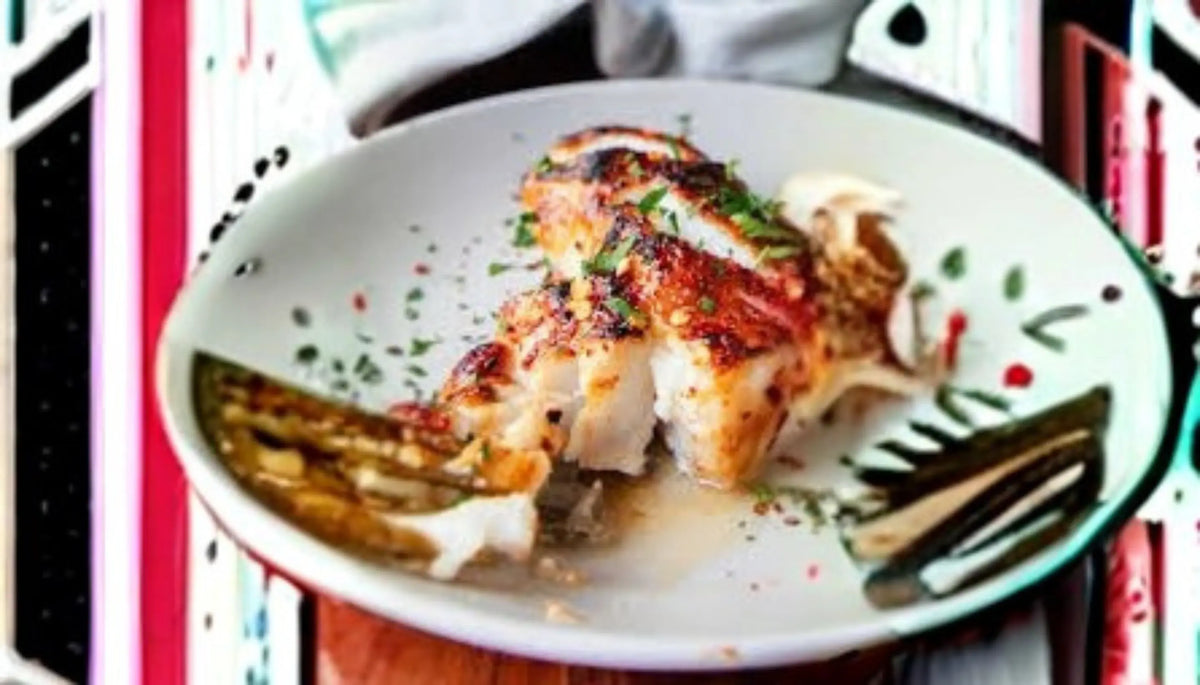
This miso black cod recipe is famous for a reason. The surface turns glossy and dark under the broiler, while the fish underneath stays soft enough to separate into large, buttery flakes. The ingredient list is short. The real work happens before dinner, when white miso, mirin, sake, and sugar have time to season the fish. Plan one day ahead and the cooking itself takes about ten minutes.
Black cod and sablefish are two names for the same fish, Anoplopoma fimbria. It is not a true cod. NOAA describes sablefish as a high-oil fish with a soft, velvety texture and large white flakes. That natural fat is exactly why this sablefish recipe works so well. Lean cod can dry out while a sugary glaze caramelizes. Sablefish stays moist, even when the edges take on a little char.
The style was made internationally famous by chef Nobuyuki Matsuhisa. His published black cod with miso recipe uses a sweet white miso marinade and a long rest before cooking. This version keeps that defining structure but is written for a home broiler, a standard sheet pan, and four individual portions. It also includes the detail that prevents most failures: wipe away the thick coating before the fish goes under high heat. A thin film browns. A heavy layer burns.
Use white miso, often labeled shiro miso, for the most balanced result. It is sweeter and less forceful than red miso, so it seasons without burying the flavor of the fish. Mirin supplies sweetness and gloss. Sake loosens the paste and rounds out the salt. The marinade should taste too strong on its own because only part of it remains on the fish after you wipe the portions clean.
This is also one of the better dinner-party fish recipes because nearly everything happens ahead of time. Mix the marinade the day before, coat the portions, and leave them cold until guests arrive. At dinner, the fish goes straight from the refrigerator to the prepared pan. Rice can be waiting in the cooker and a cucumber salad can already be dressed. The only demanding stretch is the last few minutes under the broiler, when the sugar moves quickly from bronze to dark brown. Stay close, rotate the pan if one side colors first, and let the glaze look a little uneven. Those darker edges are where the savory miso and sweetness come together.
If sablefish is unavailable, the substitute we would choose is Nordic Catch Wild Chilean Sea Bass. It has a similarly rich, forgiving texture, and Nordic Catch already uses the same miso technique in its miso-marinated sea bass recipe. Sea bass portions are slightly leaner and may finish a minute or two sooner, so start checking early. Either fish makes a dinner that feels restaurant-level without asking you to do restaurant-level work at the stove.
Nutrition
Sablefish is naturally richer than most white fish. NOAA's 100-gram raw serving lists 195 calories, 13.41 grams of protein, and 15.3 grams of fat before any marinade is added. The estimate below scales that fish data to one 5.5-ounce portion and allows for part, but not all, of the miso mixture to remain after wiping. Miso brands vary widely in sodium and sweetness, so treat these numbers as a useful range rather than a lab result. Estimated values per serving:
| Fats | % DV* |
| Total Fat 24g | 31% |
| Saturated 5g | 25% |
| Trans 0g | |
| Polyunsaturated 5g | |
| Monounsaturated 11g | |
| Cholesterol 75mg | 25% |
| Sodium 1,040mg | 45% |
| Carbohydrates & Minerals | % DV* |
| Total Carbohydrate 17g | 6% |
| Dietary Fiber 1g | 4% |
| Total Sugars 15g | |
| Includes Added Sugars 9g | 18% |
| Selenium 57mcg | 104% |
| Potassium 700mg | 15% |
| Calcium 40mg | 4% |
Ingredients
- 4 black cod or sablefish fillets, 5 to 6 ounces eachFeatured
- 1/2 cup white miso paste
- 1/4 cup mirin
- 1/4 cup sake
- 3 tbsp granulated sugar
- 2 tsp neutral high-heat oil, for the pan
- 2 scallions, thinly sliced
- 1 tsp toasted sesame seeds
- To taste yuzu kosho, optional, for serving
Preparation
Start with fully thawed fish. Frozen portions should thaw overnight in the refrigerator, still sealed, then be removed from the package and patted dry. If you need a faster method, follow Nordic Catch's guide to safely thawing seafood in cold water. Do not leave the fish on the counter. A wet surface dilutes the marinade and makes the finished glaze slide instead of cling.
The marinade must cool before it touches raw fish. Warm liquid starts changing the texture at the surface and can create an uneven cure. Make it first, let it reach room temperature, then coat the portions in a glass or other nonreactive dish. Keep everything refrigerated while it marinates. If you want extra glaze for the finished plate, spoon a small amount into a clean container before the rest touches the fish.
- Thaw the fish fully in the refrigerator and keep it cold.
- Pat each portion dry on every side.
- Cool the cooked miso marinade to room temperature.
- Use a glass dish or food-safe bag for marinating.
- Line the sheet pan with foil and oil it lightly.
- Position the oven rack about six inches below the broiler.
How to Cook
Broilers vary more than ovens, so use the clock as a guide and the surface of the fish as your signal. Set the rack about six inches from the element. You want quick, even browning, not a scorched patch directly beneath the flame. Line the pan with foil because the sugar at the edges will stick. For a broader primer on matching heat to different cuts, see our guide to the best ways to cook fish.
-
Make and cool the miso marinade
Combine the sake and mirin in a small saucepan over medium heat. Bring them just to a simmer and cook for 30 seconds. Reduce the heat to low, whisk in the sugar, then add the white miso. Stir until smooth, about one minute, without letting the mixture boil hard. Remove from the heat and cool completely. Reserve two tablespoons in a clean container if you want sauce for serving.
-
Marinate the fish
Pat the portions very dry. Put them in a glass dish or reusable food-safe bag and coat every side with the cooled marinade. Cover and refrigerate for 24 hours. For a deeper cure, you can go to 48 hours, but longer is not automatically better. The fish becomes saltier and firmer as it sits. Turn the portions once halfway through if they are in a shallow dish.
-
Set up the broiler
Heat the broiler on high with a rack about six inches below the element. Line a rimmed sheet pan with foil and brush it lightly with the neutral oil. Lift the fish from the marinade and wipe off the thick paste with your fingers or the back of a spoon. Leave a thin, even stain on the surface. Place the portions skin side down with space between them.
-
Broil until lacquered
Broil for 8 to 12 minutes, rotating the pan after 5 minutes if your element heats unevenly. Watch continuously once the glaze starts to color. The top should be mahogany with a few dark spots, not black all over. If it browns too quickly, move the pan down one rack and continue cooking. For the federal food-safety standard, the FDA recommends 145F for most seafood, measured in the thickest part. The flesh should also look opaque and separate easily with gentle pressure. Rest for three minutes.
How to Serve
Let the portions rest for three minutes before moving them. Sablefish is delicate when hot, and that short pause helps the flakes hold together. Slide a thin fish spatula between the skin and flesh if you prefer to leave the skin behind. Serve the fillet whole, lacquered side up, with a small spoonful of any clean reserved glaze that has been brought to a boil and cooled slightly.
- Keep the plate simple. The glaze is sweet, salty, and concentrated. A plain white plate and a small pile of scallions are enough.
- Add acid at the table. A squeeze of lemon is not traditional, but a few drops can balance an especially sweet miso. Yuzu kosho does the same job with more heat.
- Serve it hot, not screaming hot. The texture is silkiest after a short rest, when the surface glaze has set but the center is still warm.
What to serve it with. Build the rest of the plate around restraint. Neutral rice and crisp vegetables give the glaze somewhere to go without adding another heavy sauce.
- Steamed short-grain rice: The cleanest base and the best way to catch the glaze.
- Quick cucumber salad: Rice vinegar, cucumber, and a pinch of sugar bring crunch and acidity.
- Sauteed bok choy: Keep it garlicky but lightly seasoned because the fish already carries plenty of salt.
- Pickled ginger: A small amount resets the palate between rich bites.
Refrigerate leftovers in a shallow, covered container within two hours. They keep well for up to two days. Reheat gently at 275F until hot, or flake the fish cold over rice. A microwave works, but use 20-second intervals at half power so the oil-rich flesh does not split. Do not save or reuse marinade that touched raw fish unless it has been boiled thoroughly.


