Avocado does real work in this dish. Yellowfin is one of the leanest fish we sell, under half a gram of fat per 100 grams raw by USDA's count, so the avocado under the tuna supplies the richness and the ponzu cuts through it.
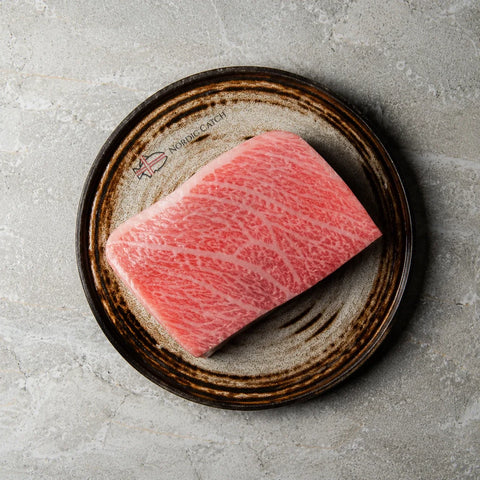
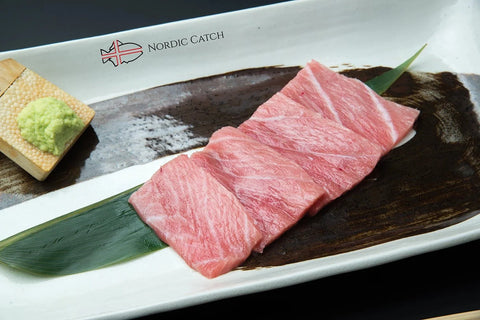
We build it on the Wild Ahi Tuna Sushi Saku Block ($19, about 10 oz). Its product page calls the fish AAA grade yellowfin, trimmed skinless and bloodline-free, and ships it ultra frozen. The dressing uses two bottles we stock, Kikkoman Yuzu Ponzu ($8 for 10 oz) and Maruhon sesame oil ($10 for 5.5 oz); the rest is shallot, a ripe Hass avocado, lime, scallion and sesame seeds.
Raw tuna raises two questions, and sushi grade answers neither; it is a seller's term that the FDA neither defines nor assigns. The first is parasites, and here yellowfin is lucky: the FDA Food Code excuses it, with five other tuna species, from the freezing step it sets for most fish sold raw. The second is temperature. Tuna held warm can build up histamine, which neither freezing nor cooking removes once formed, so every step below keeps the fish close to freezing. The FAQ covers both. Leave the tuna raw only for guests outside the FDA's higher-risk groups (pregnant women, children, older adults, people with weakened immune systems); those guests get something cooked (FDA).
The block needs a night in the refrigerator to thaw. After that, the hands-on work takes about 30 minutes.
Tuna Tartare Nutrition per Serving
Ahi is mostly protein. We computed the panel from USDA FoodData Central entries (FoodData Central): raw yellowfin at 109 calories, 24.4 grams of protein and 0.49 grams of fat per 100 grams, plus a California avocado, sesame oil, shallot, lime juice, scallion, sesame seeds and a dash of salt. The database has no yuzu ponzu, so we used Kikkoman's standard ponzu. Each serving is a quarter of the totals, with no crackers or rice counted. Treat the figures as an estimate.
| Fats | % DV* |
| Total Fat 8g | 11% |
| Saturated Fat 1.2g | 6% |
| Monounsaturated Fat 4.4g | |
| Polyunsaturated Fat 1.8g | |
| EPA + DHA (omega-3) 0.07g | |
| Cholesterol 28mg | 9% |
| Carbs, Protein & Micronutrients | % DV* |
| Total Carbohydrate 6g | 2% |
| Dietary Fiber 2.6g | 9% |
| Protein 19g | 38% |
| Sodium 435mg | 19% |
| Potassium 515mg | 11% |
| Selenium 65mcg | 117% |
| Niacin 14mg | 86% |
| Vitamin B12 1.5mcg | 61% |
Two numbers stand out. About 83 percent of the sodium comes from the ponzu, so use 2 tablespoons instead of 3 if salt matters. And this is not an omega-3 dish: the same USDA entry lists only about 0.1 gram of EPA and DHA per 100 grams of raw yellowfin, well under a tenth of a gram per serving. Most of the fat here is the avocado's. Selenium runs the other way, past the full daily value in one serving.
On mercury, the FDA and EPA advice for people who are or could become pregnant, breastfeeding parents and young children lists yellowfin tuna as a Good Choice and bigeye, the other fish sold as ahi, among the Choices to Avoid (FDA, Advice about Eating Fish). Our Wild Bigeye Tuna Saku Block is bigeye; this recipe uses yellowfin.
Tuna Tartare With Avocado Ingredients
Tuna tartare with avocado depends on two textures kept apart until the plate, firm cubes of fish and soft cubes of fruit, so they are prepped separately and meet only in the ring mold. Pick a Hass avocado that gives slightly near the stem but is not soft all over; an overripe one turns to paste under the tuna. The tuna avocado pairing needs acid and salt or it tastes flat, and the ponzu brings both. One note on the fish: the saku block's product page says its red color is retained by a tasteless smoke process. For untreated fish, our Fresh Ahi Tuna Steak, 12 oz, $36, is yellowfin sold fresh with no carbon monoxide or tasteless smoke, per its page, which also says to use it within 3 days of delivery. Use 10 oz of it.
- 1 block (10 oz) Wild ahi tuna sushi saku block, refrigerator-thawed the night beforeFeatured
- 3 tbsp Kikkoman Yuzu PonzuFeatured
- 2 tsp Toasted sesame oil, such as MaruhonFeatured
- 2 tbsp Shallot, minced fine (about 1 small shallot)
- 1 Ripe Hass avocado
- 1 tsp Lime juice
- 1 dash Fine salt, for the avocado
- 2 tbsp Scallion greens, sliced thin
- 1 tsp Toasted sesame seeds
- To serve Seaweed snack sheets, endive leaves or plain rice crackers
The thaw starts the night before. Take the block out of its packaging, lay it on a plate, cover it loosely and set it on the bottom shelf of the refrigerator. If it came vacuum sealed, opening it first matches section 3-501.13(E) of the FDA Food Code, which has kitchens remove reduced oxygen packaged fish labeled keep frozen from that package before a refrigerator thaw. The product page also asks for a slow refrigerator thaw and prompt use once thawed. By morning the block should flex slightly but feel cold to the core.
Set up the cold station before the fish comes out:
- Thaw the saku block overnight in the refrigerator, unwrapped, on a covered plate.
- Chill four small plates, a metal mixing bowl and a spoon in the refrigerator.
- Fill a sheet pan or wide bowl with ice for the tuna to rest on.
- Mince the shallot and slice the scallion greens.
- Squeeze the lime; measure the ponzu and sesame oil.
- Find a 3 inch ring mold or round cutter.
How to Dice Sushi Grade Ahi Tuna
Sushi grade ahi tuna is one of the easier raw fish to dice. NOAA Fisheries describes yellowfin meat as firm and moist, bright red when raw (NOAA Fisheries), and a cold block holds a straight edge, so the cubes come out square. Ahi is the name most menus use; the yellowfin tuna species profile on Wikipedia traces it to the Hawaiian 'ahi, which Hawaii also uses for bigeye. Our wild ahi tuna saku block is yellowfin cut into the rectangular saku shape sushi counters slice from, with no skin or bloodline left to trim, so nearly all of it goes into the bowl. For the species question, our yellowfin vs bluefin comparison covers taste and fat. Sushi grade tuna still needs cold handling, and the two steps below are mostly about temperature.
-
Keep the Saku Block Cold
Take the thawed block out, pour off any liquid and pat every side dry with paper towels. Set it on a plate over the ice and return it to the refrigerator for 10 minutes while you set up the board. Cold fish cuts cleaner, but the bigger reason is safety. The FDA's seafood hazards guidance notes that histamine risk rises once tuna is cut, because the cut flesh meets the bacteria that produce it, and calls a large surface-to-volume ratio, such as minced tuna for salads, particularly problematic (FDA Hazards Guide, Chapter 7). Diced tartare is exactly that. Our guide on how to safely thaw frozen seafood covers the overnight thaw. If your kitchen runs warm, cut the block in two and keep one half on the ice.
-
Cut Even Cubes With a Sharp Knife
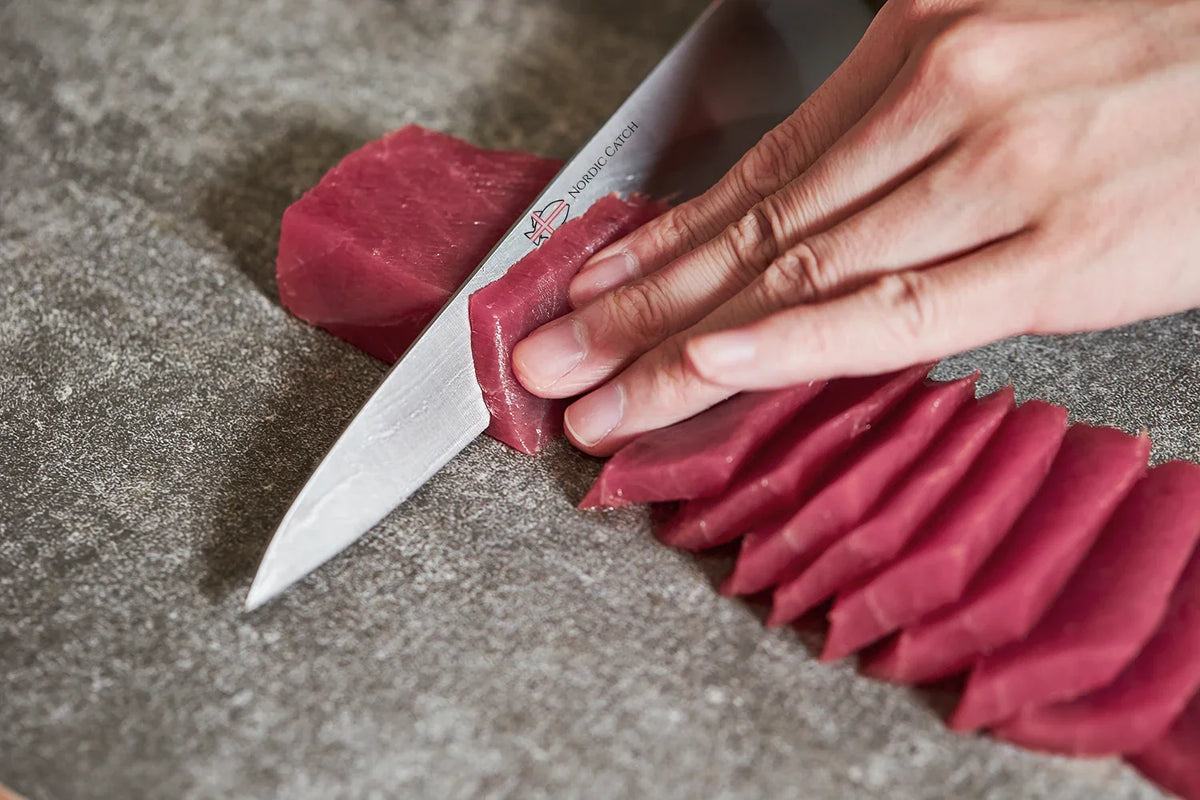
Use your longest, sharpest knife, with the board on a damp towel so it cannot slide. Slice the block into planks about 1/4 inch thick, one stroke per slice, no sawing. Stack two planks and slice them lengthwise into 1/4 inch sticks, then turn the sticks and cut them crosswise into cubes. Even cubes matter more than small ones: mixed sizes take the dressing unevenly, and the smallest bits go soft first. Move each batch into the chilled metal bowl over the ice, and keep it in the refrigerator while you make the dressing.
How to Mix the Ponzu Sauce Dressing
Ponzu sauce is soy sauce with citrus in it, which is why it suits this tuna tartare recipe. Plain soy darkens lean yellowfin and tastes mostly of salt; the citrus keeps the fish bright. We use the Kikkoman yuzu citrus sauce, $8 for 10 oz, which its product page says is made with yuzu juice and traditionally brewed soy sauce. Its partner is pure sesame seed oil from Maruhon, $10 for 5.5 oz, toasted and pressed in Japan. Two teaspoons give the tuna tartare sauce a nutty base without coating the fish, and the shallot adds bite. The ratio, about four parts ponzu to one of oil, is ours; taste and adjust.
-
Whisk Ponzu, Sesame Oil & Shallot
Put the shallot in a small bowl, pour the 3 tablespoons of ponzu over it and leave it for 5 minutes; the acid takes the raw edge off. Add the 2 teaspoons of sesame oil and whisk with a fork until the oil breaks into small beads. Taste a drop on one cube of tuna: if it seems sharp, add a few drops of oil; if flat, a few drops of lime juice. Set aside 1 tablespoon of dressing for the plates and keep the rest cold. While the shallot sits, halve and pit the avocado, dice it into 1/4 inch cubes, and fold it gently in a separate bowl with the lime juice and salt.
-
Fold the Tuna Just Before Serving
Dress the tuna only when the plates are out and the guests are close. Pour the rest of the dressing over the cubes and turn it over gently with the chilled spoon, scooping up from underneath about six times, and add half the scallion with the final turn. In our kitchen, yellowfin left in ponzu for 20 minutes turns pale at the edges and loses its bite, because the acid firms the outside of each cube. Aim for about 5 minutes from bowl to plate, and plate as described below.
How to Plate Tuna Tartare With a Ring Mold
A ring mold turns a bowl of cubes into a neat stack, red on green. Any 3 inch round works: a pastry ring, a biscuit cutter or a clean can with both ends removed. Set it on a chilled plate, spoon in a quarter of the avocado and press it level with the back of the spoon, about 1/2 inch deep. Add a quarter of the dressed tuna and press lightly, just enough to hold the shape; pressing hard squeezes out the dressing and bruises the cubes. Lift the ring straight up. Spoon a little reserved dressing around the base and finish with the remaining scallion and the sesame seeds. Repeat, and serve within a few minutes while the tuna is cold.
No mold? Layer the avocado and tuna in small glasses. Ahi tuna tartare wants something crisp beside it:
- Seaweed sheets. Our Kimnori organic seaweed snack, $2.50 a pack, is organic seaweed with sunflower oil and sea salt; tear the sheets and scoop.
- Endive leaves. Bitter, crunchy, one bite each.
- Rice or wonton crackers. Plain ones; flavored crackers fight the ponzu.
For a meal for two, spoon the tuna and avocado over warm sushi rice, the build of our sushi grade poke bowl with citrus in place of shoyu. Among ahi tuna recipes, tartare is the one where timing matters most, because the fish is cut smallest and dressed last.